How to Catch a Fish: A Step-by-Step Beginner’s Guide
Embark on an angling adventure with our beginner’s guide on how to catch a fish, featuring essential tips, gear advice, and location secrets.
How-to-catch-a-fish
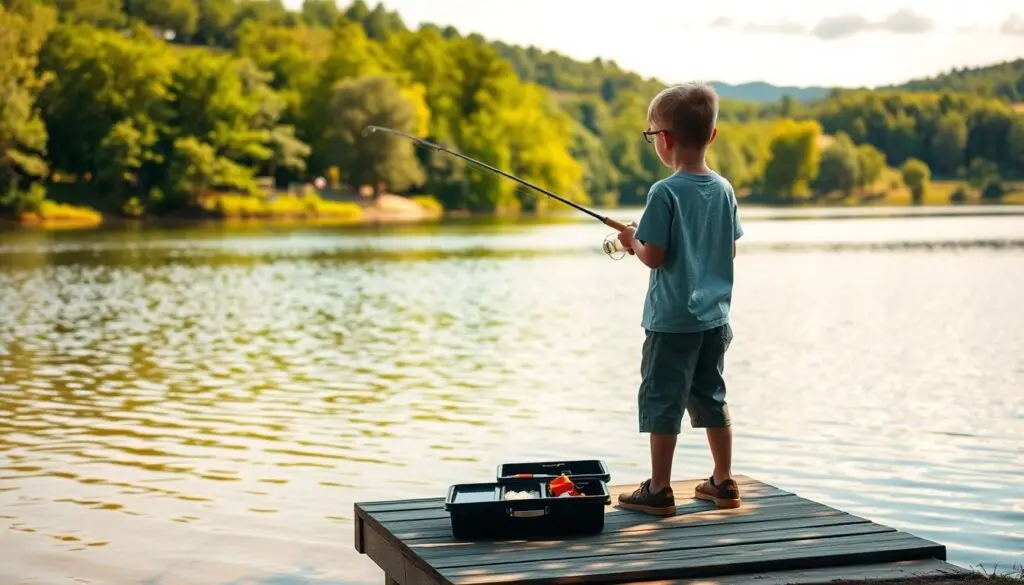
How to catch a fish: Starting out in fishing can feel overwhelming. This guide will help you learn the basics. You’ll learn how to select the right gear and master key techniques. Whether you’re fishing by a lake or at a busy pier, these tips will help you have fun and catch fish.
Fishing is exciting and lets you connect with nature. First, you need to get the right fishing gear and learn how to set it up. Remember, you might need a fishing license, depending on your age and where you are1.
Choosing the right equipment and learning about fish habitats and bait is key. You can find more info in Discover the Joys of Camping. It talks about enjoying nature and being responsible outdoors.
Key Takeaways
- How to catch a fish
- Beginner’s guide to fishing
- Best fishing techniques
- Gather the appropriate fishing gear, including a rod, reel, line, and hooks.
- Select an ideal fishing location and understand fish habitats.
- Use the recommended bait for the species you’re targeting.
- Fishing tips and tricks
- Properly set up your gear and know how to tie knots and cast your line.
- Location for fishing success
- Fishing bait selection
- Learn techniques for safely handling and releasing fish to support conservation efforts.
Beginner’s guide to fishing:
How to Catch a Fish: Gathering Essential Fishing Gear
Beginner’s guide to fishing: For anglers aiming for a successful, enjoyable experience, understanding the essentials of fishing gear is vital. The right gear not only enhances performance but also ensures safety and convenience during the fishing trip.
Fishing Rod and Reel Selection
Beginners are often advised to start with a fiberglass spinning rod and reel combo. They are durable and easy to use. Spinning rods are favored because they are affordable and good for long casts. See fishing gear essentials.
Spin-caster rods are great for fishing with children. They are easy to handle and less likely to tangle. For catching heavier fish, bait-caster rods are used. But they are harder for beginners.
Choosing the Right Fishing Line
Choosing the right fishing line is key. A 10–12-pound test line is best for beginners. It’s strong enough for most fish but easy to handle.
How to Catch a Fish: Additional Must-Have Gear
Other gear is important too. You’ll need hooks, sinkers, and bobbers. Metal sinkers help lures sink and come in many types.
Bobbers show when a fish bites. They come in different shapes and sizes for different fishing conditions.
Safety gear is a must. A first aid kit should have ointment, cotton swabs, gauze, tweezers, and bandages. Also, know the local fishing laws and have the right licenses. Most states require a fishing license for adults.
Wearing appropriate clothing and sunglasses makes fishing more comfortable. Tools like fish finders and GPS systems are useful for safety and convenience.
Choosing the right gear is important. For more information, check out Utah Wildlife Resources’ blog on basic fishing equipment. For outdoor gear tips, visit AskBill.org.
Choosing the Best Location for Fishing Success
Best fishing techniques:
Finding the right spot for fishing is key. Knowing where fish live and how they act helps a lot. Whether you’re after bass in ponds or trout in streams, each place has its own chance and challenge.
Identifying Ideal Fishing Spots
Location for fishing success: Look for spots with lots of cover and structure. Bass, trout, and catfish like places with plants or man-made things like bridges. In saltwater, snappers and groupers like reefs and shipwrecks. Local ponds and lakes are great for beginners and can have large fish such as bluegill and bass.
Understanding Fish Habitats
Knowing where fish live is important. Bass like to hide in covers. Trout like cool, shaded water in deep lakes or fast streams. Places like spillways and streams offer good fishing due to cool water and natural barriers.
Best Times for Fishing
When you go fishing matters a lot. Spring and fall are best because fish are near shore and hungry. In summer, fish go deeper, but mornings and evenings are good. Dawn and dusk are the best times, and night fishing works well for bass and catfish. Watch the water temperature, as it affects fish behavior.
| Season | Optimal Fishing Times | Preferred Fishing Methods |
|---|---|---|
| Spring | Dawn, Dusk | Bank Fishing, Shallow Water Techniques |
| Summer | Early Morning, Late Evening | Deep Water Fishing, Night Fishing |
| Fall | Dawn, Dusk, Early Evening | Shore Fishing, Spinnerbaits |
| Winter | Midday | Ice Fishing, Slow Retrieval Methods |
Selecting the Right Bait and Lures
Knowing the many fishing bait options is key to better fishing. Whether you’re new or experienced, picking the right bait can greatly help. It makes a big difference in your fishing success.
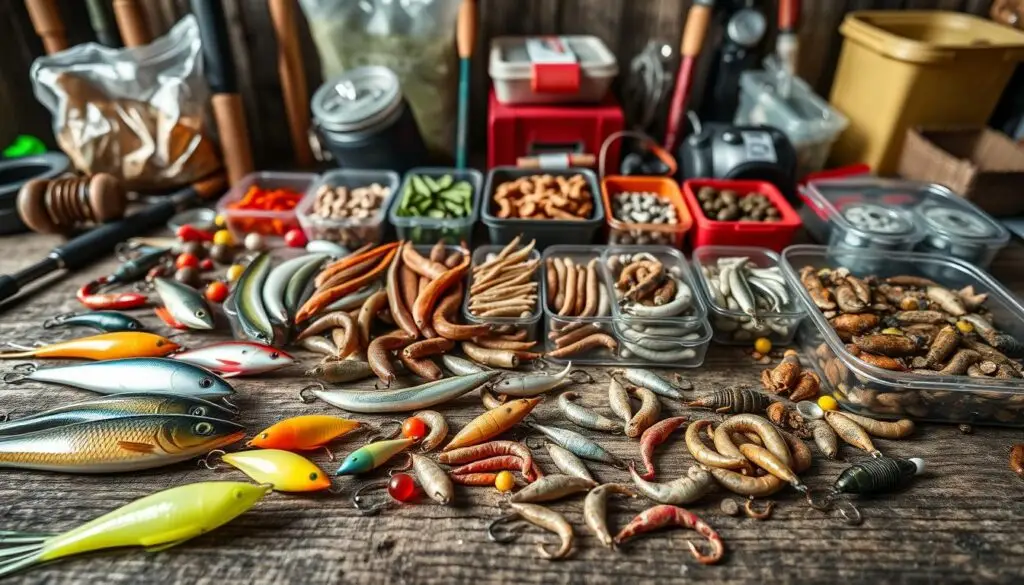
Types of bait: live vs. artificial
Fishing bait selection: Choosing between live bait and artificial lures is a big decision. Live baits like worms and shrimp work well all year6. Natural baits like nightcrawlers are great for catching catfish.
Artificial lures, such as crankbaits, perform well in a wide range of conditions. They are good for different depths.
Matching bait with fish species
Choosing the right bait for the fish you want to catch is important. For small trout, use in-line spinners. Larger reservoirs need slightly heavier ones.
Crankbaits are effective year-round and work at various depths. Spoons are great for catching panfish and bass in Utah.
Bait regulations and environmental considerations
Following local fishing rules is key to good fishing. In Utah, rules vary by waterbody. Some places only allow certain baits.
For example, worms and shrimp must be kept alive and cold. Darker lures are best in dirty water, while light colors work in clear water. For more tips, check out this guide.
Setting Up Your Fishing Rod and Reels
Setting up your fishing rods correctly is key to a fun and successful day on the water. The right balance and comfort when handling can improve your fishing trips. We’ll talk about how to get your gear ready, including tying knots, adding weights and bobbers, and casting your line.
How to tie fishing knots
Knowing how to tie fishing knots is important for keeping your bait in place and preventing line breaks. Start by practicing with a string or shoelaces to get the hang of it. When tying a knot to your lure, leave about 10 inches of line on the other side. Then, wind the line around itself five times before tightening it well. Make sure the line is a bit moist to help the knot hold better.
Attaching weights and bobbers
Weights and bobbers help keep your bait at the right depth. First, thread the line through the rod’s guides, typically four to five. Be careful not to over-tighten the reel to avoid damaging your rod. Also, select the appropriate fishing line weight and ensure your reel can hold enough line for effective fishing.
Properly casting your line
Learning to cast your line well can really improve your fishing. Anglers often cast more than 100 times in a session, so a balanced rod-and-reel setup is important for comfort. Practice smooth, controlled casts for better accuracy and distance. A lighter line, rated for 20 to 30 pounds, is best for casting and bait performance.
For more on setting up your rod and reel, check out Instructables. Also, learn about link-building strategies to boost your online presence at AskBill.
| Item | Characteristics | Recommendations |
|---|---|---|
| Fishing Line | 20 to 30 pounds | Lighter line for better performance |
| Reels | Various sizes | KastKing Kapstan Elite 300 for large capacities |
| Knot Tying | Wind 5 times | Practice with string or shoelaces |
How to Catch a Fish
Catching a fish takes patience, practice, and knowing the right techniques. Beginners need to know when a fish bites, how to set the hook, and how to reel it in. Learning these skills makes fishing fun and rewarding.
Recognizing Bites and Strikes
Knowing when a fish bites is key. You might feel slight pulls or jerks on your line. Using the right gear, like a sensitive rod, helps you feel these movements.
Talking to other anglers and visiting tackle shops can also help. They share tips and experiences that boost your chances11.
Setting the Hook
When you feel a bite, quickly pull back the rod to set the hook. Beginners should use the Palomar knot for its reliability. This knot is easy to tie.
Use a strategy that matches the fish’s natural behavior. For example, let live worms flow with the current in rivers.
Reeling in the Catch
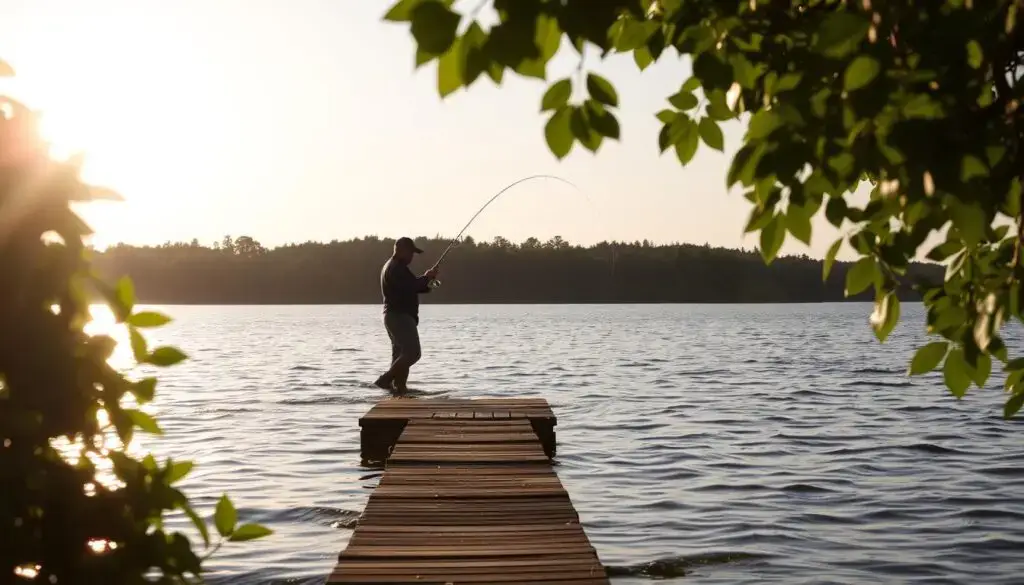
Reeling in a fish needs patience and the right technique. Keep the line tight and avoid sudden moves. Using gang hooks can help you catch more fish naturally.
Fishing during a full moon can also increase your chances. It’s important to keep trying, as it may take around 10 casts to catch a pompano.
Fish often go to deeper waters beyond the sandbar when surf fishing at St. George Island. This makes it easier to catch species like whiting and pompano.
For more tips on fishing, check out this resource. To explore more outdoors, see this guide.
Handling and Releasing Fish Safely
Fishing safety tips: Putting fish back in the water requires careful steps to help them live. Using the right ways and tools is key to safe handling.
Catching and Releasing Techniques
Good catch-and-release methods mean quick handling and less stress for fish. Landing fish quickly is key because tired fish take longer to recover. Using single-barbless hooks helps fish recover faster and live longer.
Keeping fish wet helps them avoid stress and suffocation. This is important for their survival.
Importance of Fish Conservation
Catch and release fishing helps keep fish populations healthy for future fishing13. It’s best to keep fish out of the air for less than 60 seconds for better survival. Using circle hooks, barbless hooks, or crimped barbs helps fish survive longer after release.
Some places require using circle hooks, showing how important it is to know local rules.
Using Proper Handling Tools
The right tools are vital for fish survival. Landing nets with soft mesh or rubber protect fish’s mucus. Wet hands or gloves keep fish mucus intact, which is essential for their health.
If a fish is deeply hooked, it’s best to leave the hook in and cut the line close to it. Tools like descender devices, release weights, and baskets help fish with barotrauma survive better13.
Fishing Safety Tips
Going fishing needs good safety planning for a fun and safe trip. Following key fishing safety tips helps avoid risks and enjoy the day more.
Fishing with a Partner
Fishing with a friend is safer. It cuts down accident risks by 40% compared to fishing alone14. A buddy can help in emergencies and follow safe fishing rules. Also, making a float plan boosts safety by 50%.
Safe Casting Practices
Safe casting is key to avoiding accidents. Keeping hooks and lures in boxes can stop over 60% of injuries. Know your area to avoid getting tangled up, and keep safety gear in good shape. This can reduce emergency response times by 30%.
Wearing Safety Gear
Wearing the right safety gear is vital. Life jackets can cut drowning risks by 80% in boating accidents. But, 60% of anglers don’t wear them because they’re uncomfortable. So, pick a comfy one. Additionally, non-slip shoes can reduce slip-and-fall accidents on boats by 70%.
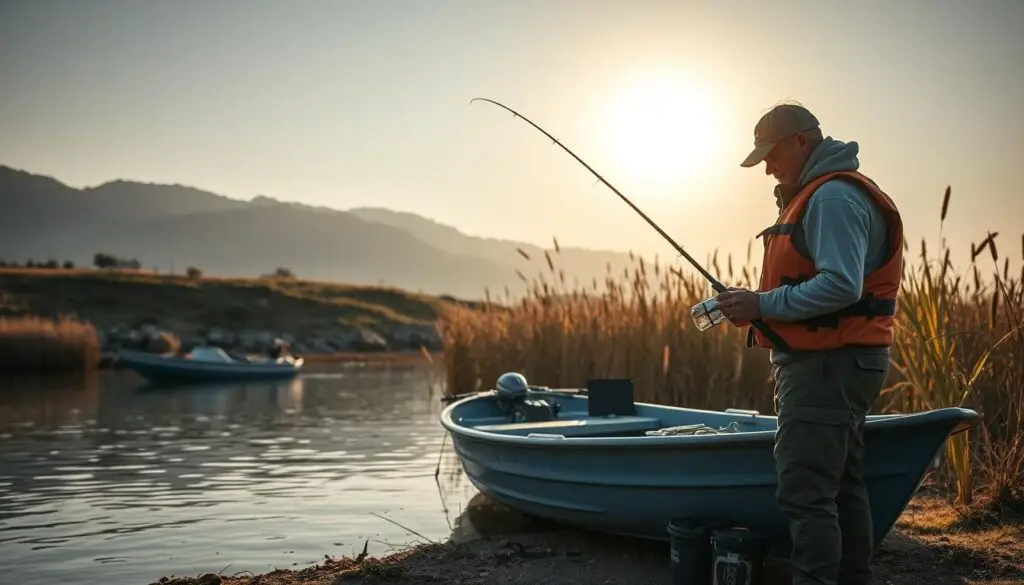
Always carry essential safety items, such as flashlights and first-aid kits. They help get ready for unexpected weather changes by 50%. For more safety tips, check out this guide on fishing safety.
How to Catch a Fish: Conclusion
This guide has shown you how to start fishing. You learned about the gear, bait, and safety. Fishing has been around for 70,000 years.
Choosing the right spot and time is key. Small-scale fishers catch nearly half of the world’s fish16. Sight fishing works best by looking close to the water17.
By following this guide, fishing can be fun and good for the planet. Always remember to fish safely for the future.
How to Catch a Fish: FAQ
What are the best fishing techniques for beginners?
Start with simple methods like bait fishing, spin fishing, or fly fishing. Each has its own learning curve. They are good for beginners.
What essential fishing gear do I need to start?
You’ll need a rod and reel, fishing line, hooks, bait or lures, and a tackle box. Don’t forget a fishing license, pliers, a net, and a fishing vest.
How do I select the right fishing rod and reel?
Select a rod-and-reel combo for your fishing style. For freshwater fishing, a medium-action rod with a spinning reel is versatile and easy to use.
What should I consider when choosing a fishing line?
Lines are made of monofilament, fluorocarbon, and braided materials. Choose based on the fish species, water conditions, and reel type.
How do I identify the best fishing locations?
Look for areas with abundant fish, such as lakes, rivers, and coastal waters. Use local reports or apps for tips. Talk to local anglers for insights.
What is the best time of day to go fishing?
Fish are active at dawn and dusk. But each species has its own time. Research the fish you’re after.
What types of bait should I use?
Choose between live bait and artificial lures based on the fish and conditions. Live bait works well, but lures are versatile and successful.
How do I match the bait with the fish species?
Know what fish eat. Bass like minnows and worms, while trout prefer insects like flies or small spinners.
How do I set up my fishing rod and reels?
Tie a strong knot, like the Palomar knot, to your hook. Add weights and bobbers for your method. Practice casting for distance and accuracy.
How can I recognize bites and strikes?
Watch for line movement or tension. A bite might feel like a tap or a pull, depending on the bait and fish.
What is the correct way to set the hook?
Lift the rod tip quickly when you feel a bite. Keep the line tight to set the hook as you reel in.
How should I handle and release fish safely?
Use wet hands or a cloth to handle fish. If releasing, return them quickly. Avoid keeping them out of water too long.
What safety tips should I follow while fishing?
Fish with a partner when you can. Practice safe casting and wear appropriate safety gear, such as life jackets and sunscreen. Keep a first-aid kit and stay aware of your surroundings.
How to Catch a Fish: Source Links
- https://www.fws.gov/story/guide-fishing-first-time
- https://hellscanyon.tours/2023/01/30/10-pieces-of-fishing-equipment-and-their-uses/
- https://smoothmovesseats.com/blog/the-ultimate-fishing-gear-guide-must-haves-for-every-angler/?srsltid=AfmBOopkEiH04xImXzlOkOT-p4nHhozk2TRVOTA-vT1ZL3gYoKFqmjIx
- https://www.wired2fish.com/bank-fishing/shore-fishing-tips-catch-more-fish-from-the-bank
- https://www.bassdash.com/blogs/fishing-knowledge/reeling-in-the-best-catch-a-guide-to-choosing-your-ultimate-fishing-spot?srsltid=AfmBOopHwWGvX826GwL2iPKT9CKnTcfttX0ZT-vTYKyxkDzUBrcgH6pf
- https://coosariver.org/fishing-basics-101-how-to-choose-a-lure/
- https://wildlife.utah.gov/news/wildlife-blog/1724-learn-to-fish-with-lure-and-bait-selection.html
- https://www.wikihow.com/Set-Up-a-Fishing-Pole
- https://kastking.com/blogs/how-to/how-to-set-up-a-fishing-rod-is-your-fishing-rod-and-reel-ready-for-action?srsltid=AfmBOoqtpC4wXap713TUnpjSWptNGcdxfNvscDQnhclyppkgFRNUQSEO
- https://www.bassmaster.com/go-fish/news/how-to-catch-fish-at-the-beach/
- https://www.nps.gov/subjects/fishing/how-to-safely-catch-and-release.htm
- https://www.fisheries.noaa.gov/national/resources-fishing/catch-and-release-fishing-best-practices
- https://www.discoverboating.com/resources/safe-fishing-tips
- https://www.desertislandsurvival.com/how-to-fish-without-gear/
- https://oneworldoneocean.com/blog/how-to-catch-fish-and-save-fisheries/
- https://www.saltstrong.com/articles/see-catch-more-fish-sight-fishing/